Transcript
On April fourth, nineteen oh two, the copper miners on the hill above Mackay, Idaho, met and formed a union. They joined the Western Federation of Miners, the big miners' union of the West.
The man they were up against ran the mine. Wayne Darlington was an engineer. He had gone to Yale, then to the mining school at Freiberg in Germany, and one account says he had worked as a mining engineer for the Emperor of China. He had laid out the town at the end of the railroad tracks. He had named it. He was its first mayor.
Two days after the miners organized, they went on strike. And when it was over, Darlington was gone. So were his superintendent and his foreman. A paper at the time said they had, quote, likewise left the country.
Three months later, an old man died in London. He was one of the richest men in America. His family's name is on that town, and as far as anybody here can tell, he never saw it. We'll come back to that spring.
This is The Borah Vista Podcast, stories from the mountains of central Idaho. I'm Jason. A quick note before we go on. The voice you're hearing is an AI copy of my own voice, and this script was researched and written with AI tools, from the sources in the show notes. This one is about the town of Mackay, the hill behind it, and about twenty-five years of people losing money on that hill.
Copper In The Wrong Place
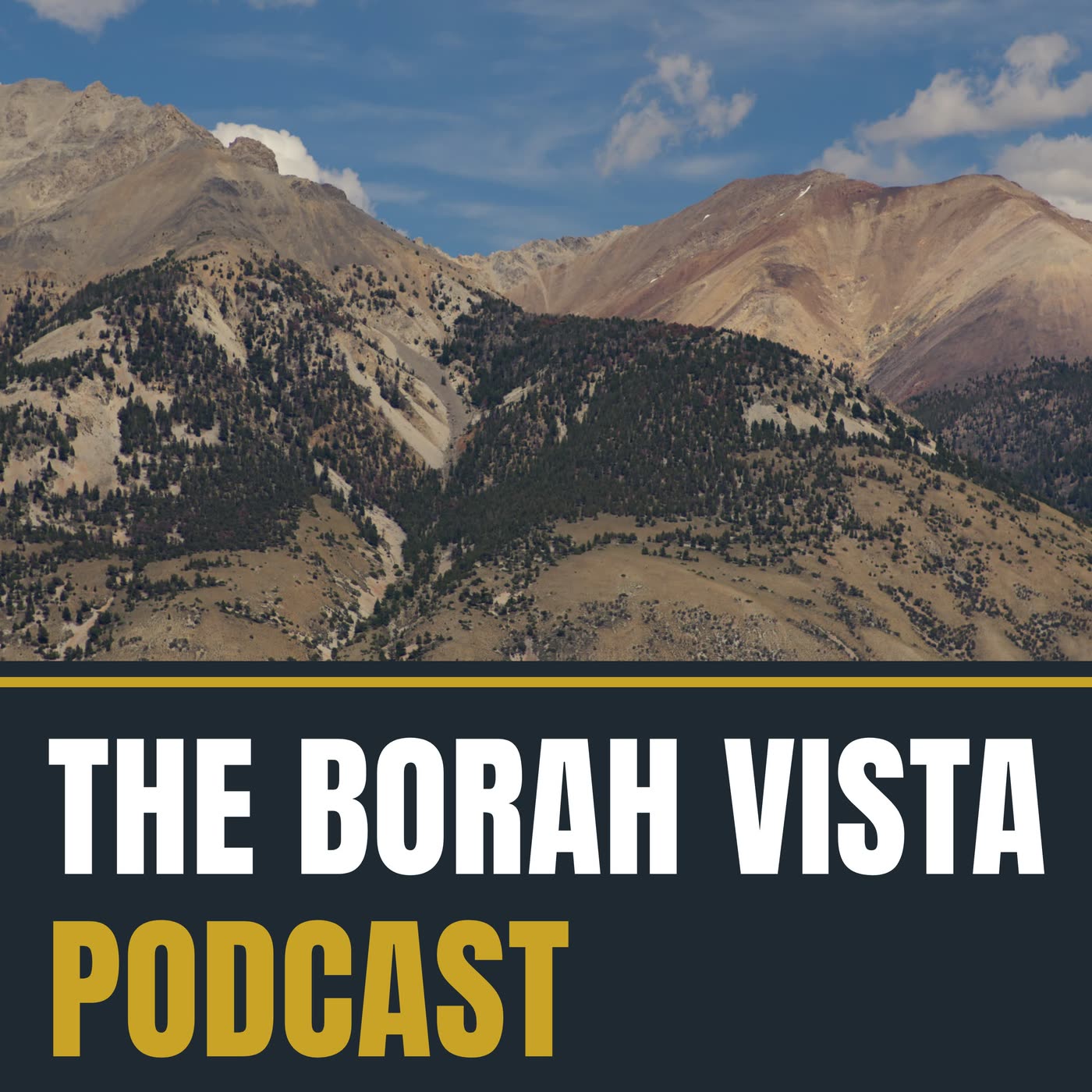
Mackay sits in the Lost River valley, about twenty minutes down the road from our place. Behind it, to the west, is a big pale mountain range called the White Knob Mountains, and at the foot of them is the hill everybody here calls Mine Hill.
Prospectors found copper along Alder Creek, on that hill, in eighteen seventy-nine. And then almost nothing happened for four years. The Idaho State Historical Society, which wrote the best history of this I've found, says they were simply too poor to dig.
In eighteen eighty-four there were new finds, and four little camps went up at once: Houston, Alder City, Carbonate and Cliff City. The historical society puts it plainly. No more than two of those four were really needed. Alder City's log buildings were moved to Houston. Carbonate had three half-built houses and what the paper called a solitary gin mill, which is a saloon, and that was deserted too.
Cliff City got the smelter. A smelter is a plant that melts the rock in furnaces so the metal runs out. This first one was small, built to handle twenty tons a day. It was fired up on November twenty-third, eighteen eighty-four. The next day, the first batch came out looking pure.
Early in December, after a little more than a week, the owner, Relf Bledsoe, shut it down and fired his whole crew.
That's the first failure on this hill. Houston, down below it, kept going for a while. It became a family town, with a school of sixty children. And by June of eighteen eighty-six, eight people were left. Most of Houston's sixty-five buildings stood empty.
Everybody Tries
The copper didn't go anywhere, so people kept coming back for it. West of Mackay, over the mountains in Copper Basin, the rock tested at thirty-five to fifty-five percent copper. Some of it was hauled by wagon down Trail Creek to Ketchum, and then shipped all the way to a smelter in Salt Lake City.
In August of eighteen ninety, investors from New York came to Houston's rescue. The historical society says a young and inexperienced mining superintendent spent one hundred thousand dollars there in twenty-six days, all to no advantage. Then the work stopped and everybody got discouraged again.
In eighteen ninety-two it was British money. They built a good road to a mine on Alder Creek, and in August, the man in charge, described at the time as the eccentric Englishman, abruptly went home to Sheffield.
In eighteen ninety-four it was W. A. Clark, one of the copper kings of Butte, Montana. He ran the old smelter again and started up another furnace. He called it prospecting.
The trouble wasn't only the rock. It was everything around it. Not much timber grows big here, so mine timbers cost fifteen dollars for a thousand feet of boards. Firewood ran four dollars a cord. Miners made three dollars to three and a half for a day of eight to ten hours. In eighteen ninety-nine, the whole hill produced eight thousand dollars' worth of copper. It needed somebody with a lot more money.
The Comstock Money
John W. Mackay was born in Dublin in eighteen thirty-one. His family came to New York when he was a boy, to the Five Points, one of the worst slums in the city, and he sold newspapers. He went west for the gold rush and didn't find much. Then, in Nevada, he went to the silver mines of the Comstock Lode, and there he got rich. He became one of the richest Americans of his time.
His son was Clarence Mackay. In eighteen ninety-six, Clarence went to Wayne Darlington in Philadelphia and asked him to come out here and manage a copper company. The Darlingtons arrived in the valley the next year.
And John Mackay had what nobody before him had: enough money to bring a railroad. He arranged with the Union Pacific to build a branch line north from Blackfoot, up the Lost River valley, to his mine.
Houston, by then, had two stores, a restaurant, a boarding house, a blacksmith, two livery stables, four saloons and a Methodist church. The new railroad ended three miles away. So Houston went to the railroad. A lot of its buildings were picked up and moved. When the trains reached the valley in nineteen oh one, the new town had about twelve hundred people.
Darlington named it Mackay. Now, which Mackay is a good question. Most sources say the father, John. The local history book, Mackay's Yesterdays, says the son, Clarence. And one local historian wrote that the fairer name would have been Darlington. Our first episode was about Custer County, named after a general who, as far as I can tell, never saw it. Our second was about a mountain named after a senator who, as far as I can find, never stood on top of it. Here's a town named after a man who never saw it, and we're not even sure which man. We do this a lot around here.
The Machine
The Mackay money built big. Right across the river from town, up on the side of the hill, they put up a stone wall twenty-five feet high, and behind it a brick smelter. Brick tunnels carried the smoke to an iron stack ten feet across and a hundred and twenty feet tall. Five hundred men worked on the job. The plan was for six hundred tons of rock a day. Remember the first smelter, at Cliff City? Twenty tons.
Then, to bring the rock down from the mines, they built an electric railroad up the mountain. About seven miles of track, climbing twenty-one hundred feet. Two electric engines and forty ore cars, about eighty tons of rock to a train. One account says the engines had names, Jack and Betty.
Another account, from a trade magazine that wrote it up in nineteen oh four, says that first winter the snow was ten feet deep in places. The crew built their own snowplows and bolted them to the front of the engines, and the trains ran every day.
Back To That Spring
So here's that spring again. The state historical society says Darlington had been unable to get along with his miners. They formed their union on April fourth, nineteen oh two, and two days later they struck, in the society's words, to avoid being driven out. Darlington was let go, and so were his superintendent and his foreman. After that, Mackay was a union town. It even had a union restaurant.
There is another version. A local history written in nineteen ninety-nine says the company was losing money, a new vice-president arrived to take control, and Darlington and the other officers resigned. One account says he quit. The state historical society says the miners won. Either way, he was out, with the smelter about half built.
On July twentieth, nineteen oh two, John Mackay died of heart failure in London. He was seventy.
That October, they finished the first furnace. They never built the second one, the one that was supposed to get them to six hundred tons.
And then the real problem. The way this smelter was built, it needed rock with a lot of sulfur in it, and this rock didn't have enough. The sign at the site says it plainly: the process was flawed. They tried mixing in other ore that did have the sulfur. At one point they were hauling ore up from Bingham Canyon, Utah, to mix in, then shipping the copper back down to Utah. It never paid.
In nineteen oh six, the sign at the site says, a horrific fire burned the building where they sampled the ore, the machine shop, the engine house, and most of the buildings on the upper level. Here's the sign, word for word. One workman was killed, his companion badly burned.
I haven't found his name.
In nineteen seventeen, a government geologist named Joseph Umpleby wrote up this whole district for the U.S. Geological Survey. He was not gentle about the companies that owned the mine from nineteen oh one on. Here it is, word for word. The succession of White Knob companies which owned this property during the next five years is notorious in the annals of mining, each being a drain on the investing public and a failure more disastrous than the one preceding it. After an expenditure of about three million dollars, without a cent of profit, the enterprise passed into the hands of the Empire Copper Company.
He called it deceit and mismanagement. A failure more disastrous than the one preceding it. Hold on to that line.
The Man Sent To Close It
By nineteen oh five, one count says seven managers had tried and failed. A New York man, George Young, bought the whole thing for about a million dollars. And a man named Frank Leland was sent up from California to dissolve the company and take its plant apart.
He didn't. The historical society says Leland had a gift for cutting costs. He sold off what the paper called superfluous supplies and equipments, to raise cash. He hired a good assayer, the person who tests the rock for how much metal is in it. He used up the low-grade rock that was already sitting there by mixing it with better rock from what one paper called some intelligent leasers. A leaser is a miner who rents a piece of the mine, digs it on his own, and is paid by what he brings out.
Then he got rid of the electric railroad. He put on a Shay instead, a steam engine built for steep mountain logging grades, and the cost of hauling the rock dropped to about a quarter. Within two years, a writer at the time said Leland had rescued and transformed White Knob from a dismal failure to a large and profitable producer of copper.
The smelter didn't come back. By nineteen oh eight, the sign at the site says, all smelting on the hill had stopped. From then on, the rock went out by rail to smelters in Utah. The Empire Copper Company ran the mine with leasers, and Umpleby, the same geologist, wrote that it was making a noteworthy profit. In nineteen fifteen there was a record year, with two hundred men. In nineteen sixteen, the investors got a dividend of a quarter of a million dollars.
And around nineteen eighteen they did something I love. They took out the railroad and strung an aerial tramway: steel cables on thirty-six towers, about three miles from the mine down to the bottom, with buckets of rock riding the cable. It ran on gravity. The full buckets coming down did the work of hauling the empty ones back up. The historical society says it cut the cost of getting the rock down by eighty percent.
All of it ran on wood, and there wasn't much wood here to begin with. Up on the hill, where Alder Creek and Cliff Creek come together, there are three charcoal kilns, big stone ovens for turning wood into charcoal. One local writer says they made fuel for the smelter. They're still standing.
White Knob And The Long Tail
Up on the hill, near the mines, there was a second town. It was called White Knob. It had a movie house, a barbershop, a pool hall and telephone service. One account, from a man who grew up there, says the first schoolhouse was destroyed by a snowslide over a Christmas vacation, and the mothers insisted the new one be built one canyon to the west.
The mine kept going, on and off, for a long time. In nineteen twenty-four they put in a new kind of mill that could pull copper out of the low-grade rock they'd been leaving underground for years. In nineteen twenty-eight a new company took over and rebuilt. In August of nineteen thirty, early in the Depression, it shut down. The next year the property went to a tax sale. White Knob, the town, was empty by the middle of the nineteen-thirties. There was tungsten nearby in the fifties. The Horseshoe mine, on the same hill, ran until nineteen seventy-eight.
By the historical society's count, the hill produced around fifteen million dollars in all. And in two thousand four, the town of Mackay turned the whole thing into a free, self-guided tour. About twenty miles of road, with signs at the stops telling you what you're looking at.
The Twist
Here's the part I didn't expect. I thought this was a history. It isn't over.
There's a company called Phoenix Copper. The Idaho Conservation League describes it as a UK company. Its Idaho company is called Konnex Resources. It wants to dig an open pit on Mine Hill, about five miles from Mackay, right over the old underground mine.
Their plan, from a study they put out in twenty twenty-four, is eight years of mining, copper, gold and silver, out of about ten million tonnes of rock. They filed a plan with the Bureau of Land Management in June of twenty twenty-one. The conservation league says the bureau sent it back as incomplete. The conservation league also says the old mine waste on the hill still carries arsenic.
In September of this year, twenty twenty-six, a business news site reported that the company had raised about three million dollars and is updating its study. Permits aren't done. And here's what the company's chief executive said, word for word. Our path to production is straightforward, provided we obtain the financing we need.
In eighteen ninety, it was New York. In eighteen ninety-two, it was an Englishman who went home to Sheffield. Then Butte. Then the Comstock. Then New York again. And now a company the conservation group calls British, waiting on the money.
I'm not going to tell you how that one ends. I don't know. But I've read what the government geologist wrote in nineteen seventeen, and I'll be watching.
The Wrap
So, the man who laid out the town, named it and ran the mine was gone after a two-day strike. The man the town was named for, if it was him, died that summer in London without ever seeing it. A workman died in the fire of nineteen oh six, and I haven't found his name. Seven managers failed, and three million dollars went into the hill without a cent of profit. Then one man who was sent to close it down made it pay, by letting the miners dig it themselves and moving the rock down on gravity.
Go See It
You can go see all of it, and it costs nothing. Start at the smelter site, right across the river from Mackay. The wall is gone, and so is most of the brick, but there's a steam shovel out front, the old Shay engine house, and the blacksmith and machine shop, full of tools and ore cars. There's no ticket and nobody working there. When I first went, I filmed myself walking in, and this is what I said. So I am at the Mackay Mining Museum. I've probably got that name wrong. It's probably called something else. It's free. You just drive up. There's nobody here.
I did get the name wrong. It's the Smelter Site, the first stop on the Mackay Mine Hill Tour. Pick up the tour map in town before you head up. The tour runs about twenty miles, with up to nineteen stops: the charcoal kilns, the town of White Knob, the rebuilt Shay railroad trestle, the tramway towers and the building at the top where the buckets were loaded.
It's a summer trip, roughly Memorial Day to Labor Day, so if you're hearing this in winter, keep it for next year. Most of it is dirt road. I've driven it in a regular car in dry weather. The trestle spur is a single lane, with no turnouts, and only for machines under fifty inches wide. If you're bringing an ATV or a side-by-side from out of state, you'll need an Idaho sticker for it. Bring water and food. There's nothing up there, and don't count on a phone signal. Some of the hill is private, and the mining company can close parts of it, so watch the signs.
Everything we know about getting around this valley is at borah vista dot com slash guide. And when you're up there, look for the three stone kilns where Alder Creek and Cliff Creek come together. That's where the forest went.
What They Won
I want to go back to that spring one more time, to the miners, and what they got out of it. Before the strike, everybody who worked the hill had to use the company's facilities. Here's how a paper put it, after it was over, word for word. Married men were not allowed to board with their families, but now single men, as well as married men, can board where they please.
They could go home for supper.
This has been The Borah Vista Podcast. I'm Jason. Thanks for listening.
Sources
- Idaho State Historical Society, Reference Series 208: Mackay and Copper Basin (1980)
- Joseph B. Umpleby, USGS Professional Paper 97: Geology and Ore Deposits of the Mackay Region, Idaho (1917)
- Interpretive signs at the Smelter Site, Mackay Mine Hill Tour
- Wayne C. Olsen, Early Mining on Mackay Peak (2019)
- Earl A. Lockie, South Custer County Historical Society: Mackay's Mackay
- Juvanne Ciezie, Arco Advertiser, June 1999: Wayne Darlington
- John Parsons, Mackay's namesake (2016)
- Wikipedia: John William Mackay
- Wikipedia: Electric railway of the White Knob Copper Co
- Wikipedia: White Knob, Idaho
- Visit Idaho: The Mackay Mine Hill Tour
- Advisory Council on Historic Preservation: Mackay, Idaho
- Bill Schiess, East Idaho News, September 24, 2016
- Idaho Conservation League: Prospective mining projects near Mackay
- Pulse 2.0, September 15, 2026: Phoenix Copper and the Empire Mine
- Jason Leue's own visit to the Smelter Site, July 16, 2026